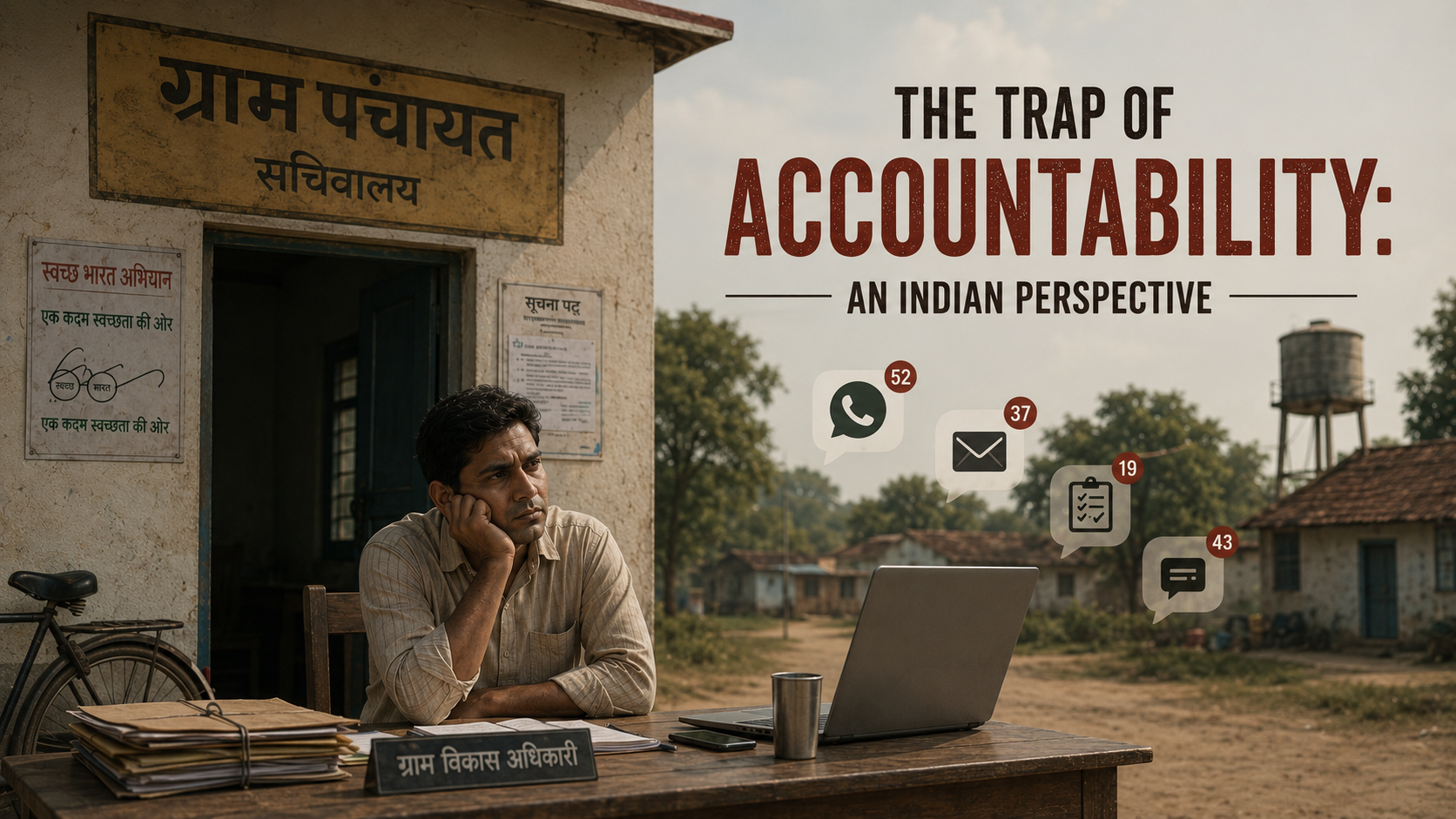

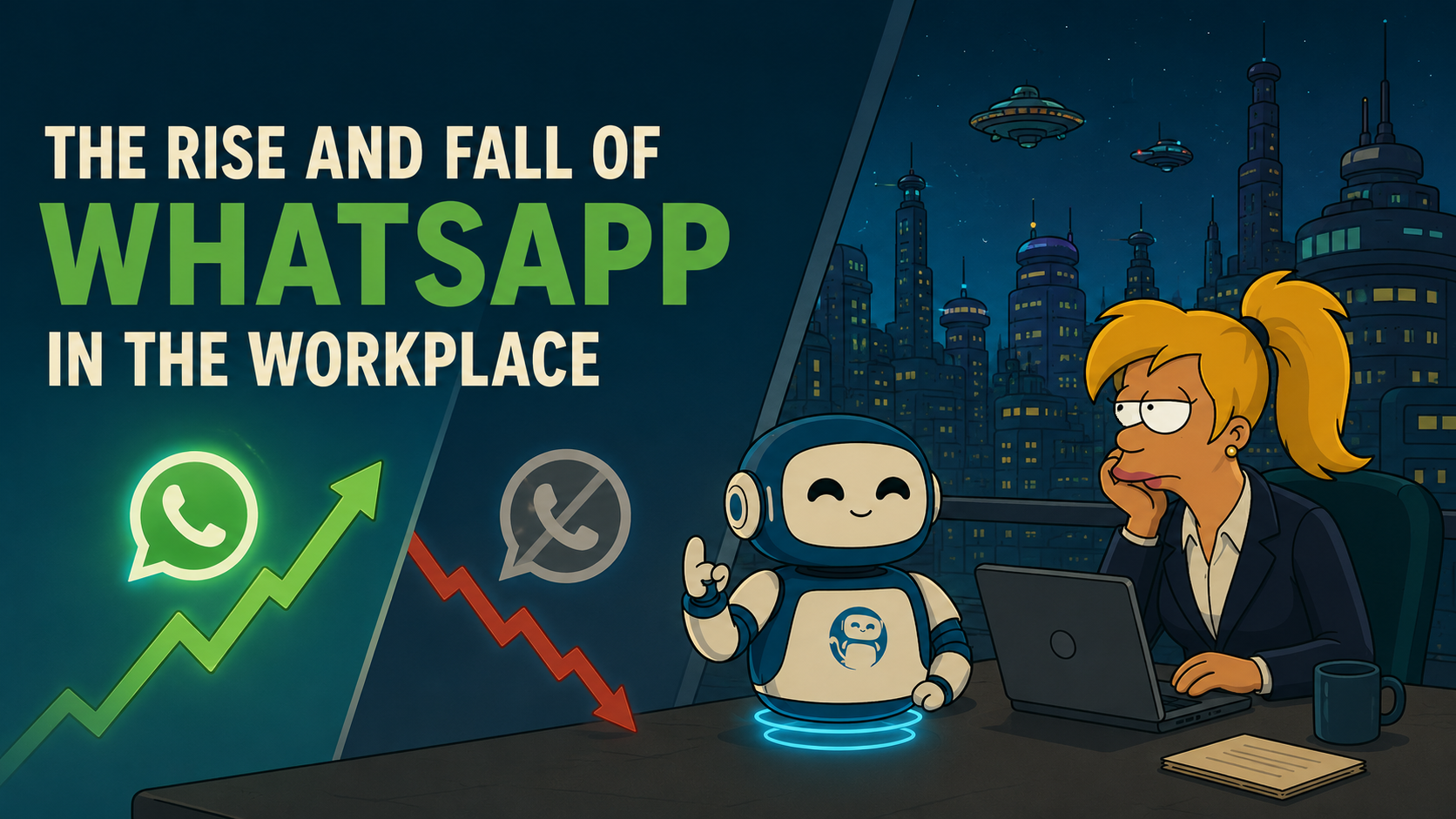
Every workplace has that one story. The office printer that only jams when the CEO wants to print something. The intern who accidentally replied-all to a company-wide email. And now: the WhatsApp group that receives 487 messages before breakfast.
How we got here is less a cautionary tale and more a corporate tragedy in three acts.
Act OneThe Forbidden App
There was a time when mentioning WhatsApp in a boardroom got you the same look as suggesting the company servers be hosted from a cybercafe in an undisclosed location. It was not just discouraged. It was treated like digital contraband. The concerns were not entirely unfounded: documented security vulnerabilities, credible reports of foreign intelligence services actively exploiting weaknesses in the platform, and a general sense among IT departments that any sufficiently motivated third party was probably reading your group chat in real time. Side-eying it the way airport security side-eyes a suspiciously ticking suitcase was, in this case, a professionally defensible response.
And yet, somehow, this dangerous app was also where half of India's MSMEs ran their entire business. Invoices, supplier orders, "bhai payment kar do" reminders, all happily zipping through WhatsApp. The same employees who would not dare send a client deck over WhatsApp had absolutely no problem sending three-paragraph good-morning forwards, fifty-seven flower images to every known relative, flirty blue-tick negotiations, and the occasional unsolicited meme of a cat wearing sunglasses.
WhatsApp's risk profile, apparently, depended entirely on whether feelings or invoices were involved.
That uncle who refuses to type? Already sending three-minute voice notes across six different family groups. But discuss quarterly sales numbers? "No no, that's not professional."
For most Indian MSMEs, though, reality looked different. While large corporations debated compliance frameworks and encrypted email servers, smaller businesses simply wanted to know whether the delivery truck had left the warehouse. WhatsApp became the unofficial ERP.
 Act Two
Meta Rides in on a White Horse (Wearing a Suit)
Then Meta showed up, and suddenly WhatsApp got a corporate makeover faster than an intern given a LinkedIn headshot budget. "Secure." "Reliable." "End-to-end encrypted, properly this time." The implication was clear: the vulnerabilities that had made IT departments nervous for years had been addressed, the platform had been hardened, and the era of foreign agents intercepting your delivery confirmations was, apparently, behind everyone now. It was like watching a back-alley card game suddenly relocate into a glass conference room with a Patagonia vest and a Series B.
Overnight, the stigma evaporated. Every company wanted a "WhatsApp-integrated solution." Software vendors proudly displayed the green logo the way restaurants display "Pure Veg," a signal of trustworthiness so universally understood it needed no explanation. Every software demo suddenly had the same line.
"Don't worry. We integrate with WhatsApp."
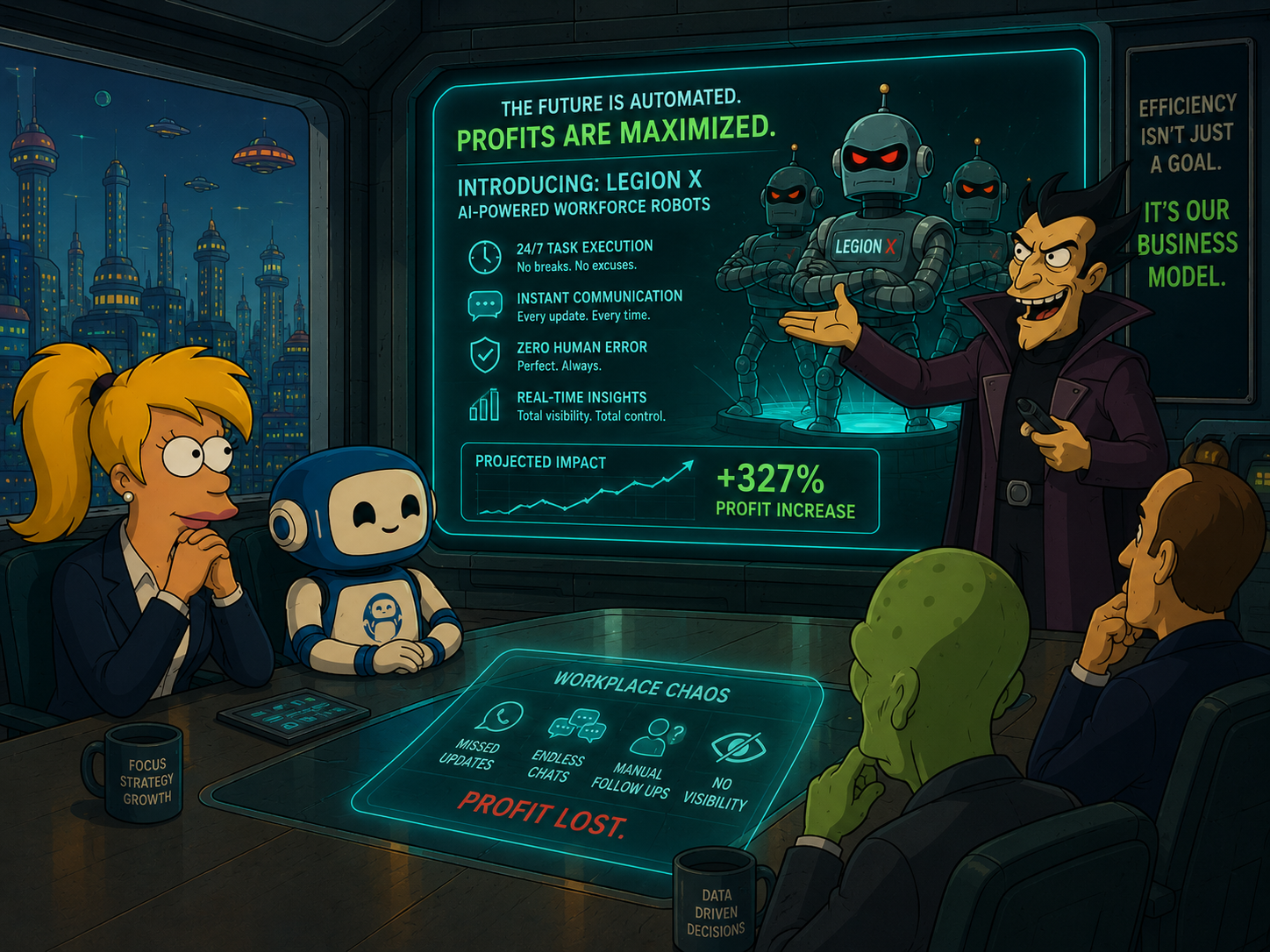
Then came the deluge. Notifications. Approvals. Invoices. Purchase orders. Attendance. Support tickets. Daily reports. Photos. Videos. PDFs. Voice notes from that one uncle who still refuses to type. Onboarding, HR announcements, project updates, the canteen menu: if it could theoretically be typed, someone wanted it pinged through WhatsApp. We went from "don't even open that app at work" to "why doesn't the CRM sync with WhatsApp yet" in about eighteen months.
Act ThreeThe Group Chat Apocalypse
And here is where every good story takes its inevitable nosedive into farce.
One team became five groups. Five became fifteen. Before long, people belonged to more WhatsApp groups than actual departments.
- General Updates.
- Sales Team.
- Sales Team (Important).
- Sales Team (Only Important).
- Sales Team (Urgent Only).
- Sales Team (Really Urgent).
- Sales Team (Don't Chat Here).
Guess which one everyone chatted in.
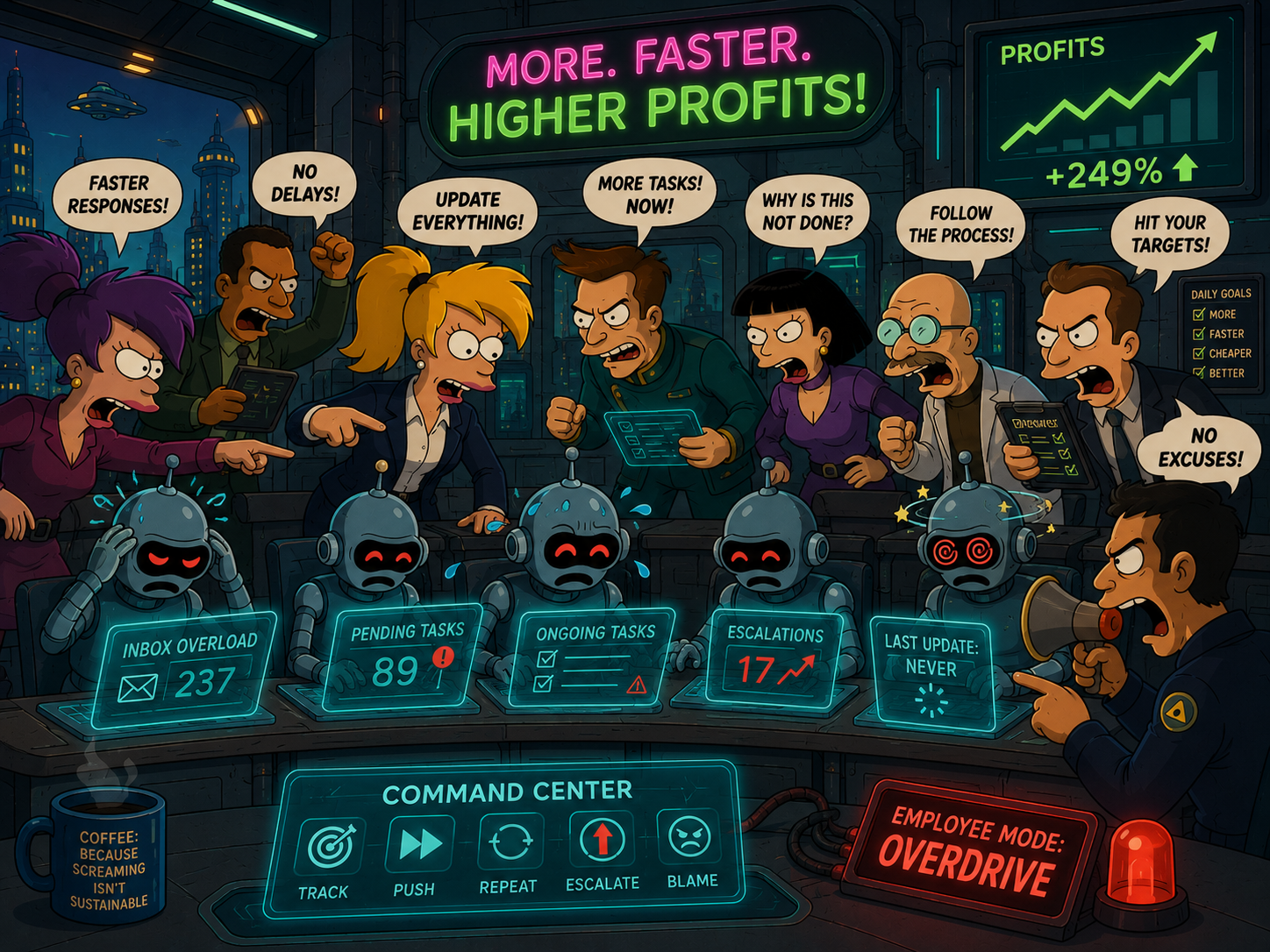
Picture this: a 90-member group named "Project Phoenix: URGENT: Final" that has not, in fact, discussed Project Phoenix in the last 400 messages. Somewhere between message 14 and message 380, the conversation quietly mutated into a debate about lunch orders, a stray "Happy Birthday Sir" cascade, and someone sharing an inspirational quote about eagles.
Reading work messages became a game of Russian roulette, except instead of bullets, it's relevance. You scroll past 200 notifications hoping one of them is actually meant for you, like a customs officer searching luggage, except the luggage is infinite and somebody's uncle keeps adding more.
And retrieving old information? That's not a search function, that's an expedition. You're not "looking something up," you're spelunking. Your thumb develops genuine cardio fitness from the scrolling. At some point a silent calculation kicks in: do I scroll for three more minutes, or do I just pretend I never saw the original message and ask the guy again? Nine times out of ten, dignity loses to convenience, and you type "hey can you resend that PDF" for the fourth time this week.
WhatsApp had become the workplace equivalent of that one drawer in every Indian household. Old batteries. Warranty cards. Three keys that open absolutely nothing. A Nokia charger from 2007. Nobody knows exactly what is in there. Nobody wants to clean it. But somehow everyone believes something important is in there somewhere.
 Epilogue
Same Bogeyman, Better PR
And now, naturally, the new obsession is bolting AI onto the whole mess. Let AI read your group chats. Let AI summarize the 800-message thread about the office Diwali party budget. Let AI become the all-knowing corporate Wikipedia that finally tells you which message had the client's actual deadline in it.
Which is, charmingly, exactly back to square one, except the bogeyman has changed costumes. Instead of "foreign agents are almost certainly intercepting our messages as we speak," it's now a friendly AI Santa Claus who wants to give you summaries, action items, and meeting notes. The only small request?
"May I have every conversation your company has ever had?"
That's quite the stocking stuffer. And somehow this feels safer to people purely because the AI in question is owned by a company headquartered somewhere with better Yelp reviews on democracy.
But let's be clear: "Western-owned" is not a synonym for "secure." Security is determined by architecture, policies, deployment models, access controls, data retention, and whether your company actually understands where its information goes. Every message, document, and group-chat eagle quote you feed into these systems still lives on someone else's servers, governed by someone else's terms of service, accessible under someone else's incident-response policy. We did not solve the trust problem. We outsourced it to a company with a friendlier logo.
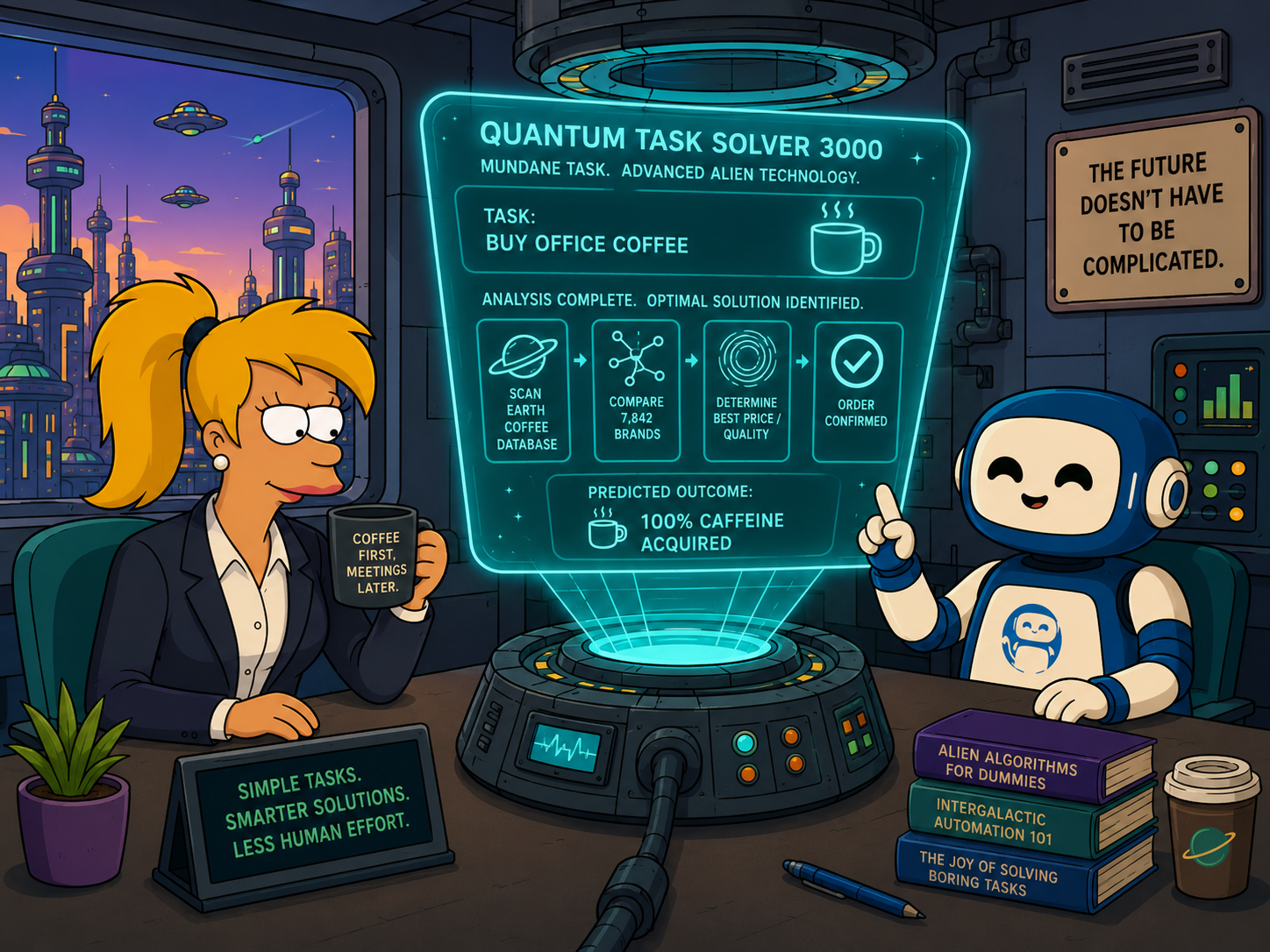
Technology follows a strangely predictable pattern. We adopt something because it solves yesterday's problem. We overuse it until it creates tomorrow's problem. Then we buy another technology to solve that problem. Email solved paperwork. Instant messaging solved email overload. WhatsApp solved communication friction. AI is now solving WhatsApp overload. Give it a few years and we will probably need another tool to organise all the AI-generated summaries. Hopefully with fewer notifications.
WhatsApp did not fail. It succeeded too well. It became so indispensable that we loaded everything onto it until it buckled, then hired AI to carry what spilled. The real lesson is not about WhatsApp, or AI, or Meta. It is about resisting the temptation to turn every useful tool into the only tool.
Because somewhere, right now, there is already a company building an AI-powered WhatsApp summary bot.
That sends its summaries on WhatsApp.