
There's a particular kind of horror that only a software guy running a small dev shop in Delhi can understand: the horror of opening a Google Drive link and seeing a task list with 3,000 rows on it.
I want to tell you about that list. And about its evil twin from another client. Because together, they taught me something most Indian workplaces still haven't figured out: accountability and surveillance are not the same thing, even though every WhatsApp group admin in this country seems to believe otherwise.
The WhatsApp Effect
Somewhere around the time WhatsApp became the de facto nervous system of Indian offices, a strange belief took root in management circles: if I can message you at 11 PM, I should know exactly what you're doing at 11 PM. Communication got instant, so accountability was expected to get instant too. Visibility became a proxy for productivity. "Are you free?" became corporate shorthand for "I will now assign you something with zero context and expect a status update by lunch."
This is the trap. Companies don't actually want accountability. They want a dashboard for their anxiety. And the moment a tool gives them the ability to track every keystroke, they mistake that ability for management.
It's a bit like giving someone binoculars and expecting them to become a better marathon runner.

Client One: The List That Time Forgot
Our first client had a "task tracker" (and I use that term the way you'd call a haunted house a "cozy cottage.") It was a single Google Sheet, inherited across five years and at least three generations of interns, with roughly 3,000 open items.
Some of those tasks had been waiting so long they could probably apply for an Aadhaar card. Scrolling through, I noticed entries from years ago: "Discuss office chairs." "Review vendor quotation." "Remind Sharma ji." Nobody knew whether Sharma ji had retired, been promoted, or achieved enlightenment in the Himalayas. Yet there it was, dutifully waiting for action.
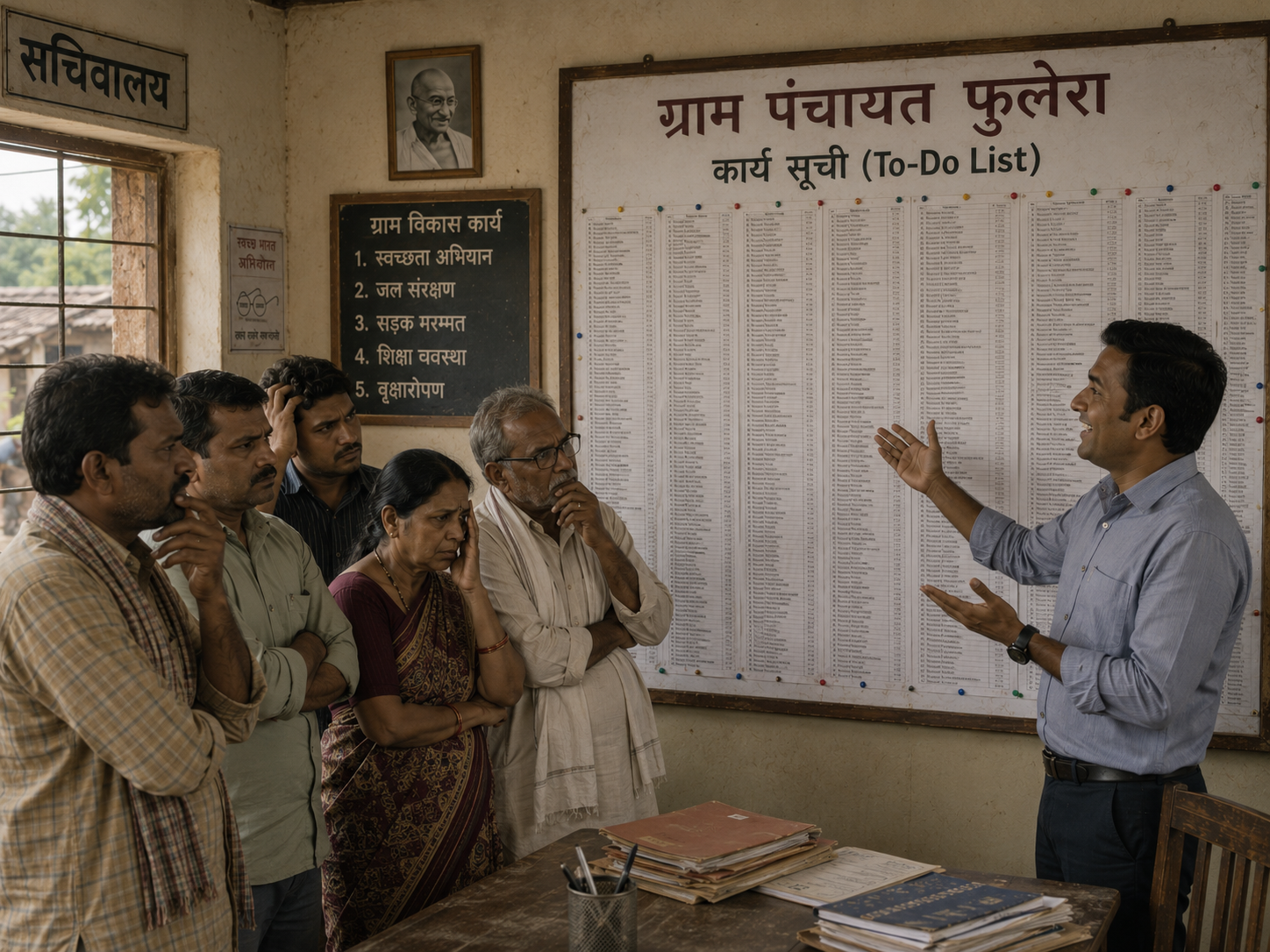
Here's how it grew: any time a manager so much as thought of a task (in a meeting, in the shower, possibly in a dream) it went on the list. Nobody closed anything. Nobody owned anything. It was less a task tracker and more a digital attic where unfinished decisions went to gather dust.
We don't have an accountability problem. We have an accountability addiction.
To manage this beast, they had hired five secretaries. Not five project managers. Five humans whose entire job was to chase down tasks across multiple, simultaneous, redundant channels:
- Email the task.
- Print the task. Physically. On paper. Like it's a wedding invitation.
- Phone call #1 to confirm receipt of the printed task.
- Phone call #2, from a different secretary, to ask why it's not done yet.
- WhatsApp message asking for status.
- Meeting reminder asking about the WhatsApp message.
- Completion reported on email, updated on the Sheet, announced on WhatsApp, and discussed once more in the weekly meeting for good measure.
By the end of it, I wasn't sure whether they were completing tasks or applying for a passport.

Five people, five channels, one task. It was less a workflow and more a relay race where every runner refuses to believe the baton was passed.
When we tried to introduce our task management tool, we expected relief. Instead, we got resistance, and it took us a while to understand why. These people weren't protecting a "system." They were protecting a survival ritual. They had built so much muscle memory around chasing the chaos that asking them to use one clean tool felt like saying: "Good news! We've reduced your paperwork. Now you only have one more form to fill."
Client Two: The Optimization Death Spiral
If Client One was accountability rotting from neglect, Client Two was accountability metastasizing from ambition. This one didn't fail from too little structure; it failed from too much, applied in increasingly creative ways, like a fitness app designed by someone who hates you.
It started reasonably enough. Some employees had daily tasks, some weekly, some monthly. They wanted reminders when deadlines passed. Sane request number one.
Then came request number two: employees must upload proof of work before any task counts as done. Screenshot. Photo. Something. Suddenly everyone's job had a side-job: documenting that they did their job.
Then request three arrived, and this is where it stopped being a task tracker and started becoming a Black Mirror pilot: track workload by speed, and give more tasks to anyone finishing early. Imagine running a marathon, finishing strong, and being told "great pace, here's another marathon" as a reward. Naturally, completion times across the company mysteriously slowed down. People weren't being lazy. They were being smart. You don't outrun a system that punishes outrunning it.
By request four, we were in full dystopia: log your hours per task, justify any delay in writing, and every hour of every person's day had to be filled with an assigned task. Idle time wasn't a red flag anymore; it was treated as a crime scene.
"Ideally, every hour of every employee's day should have a task assigned to it. If they ever have free time, the system should immediately allocate more work."
At that point, I wasn't designing software anymore. I was designing a prison schedule.
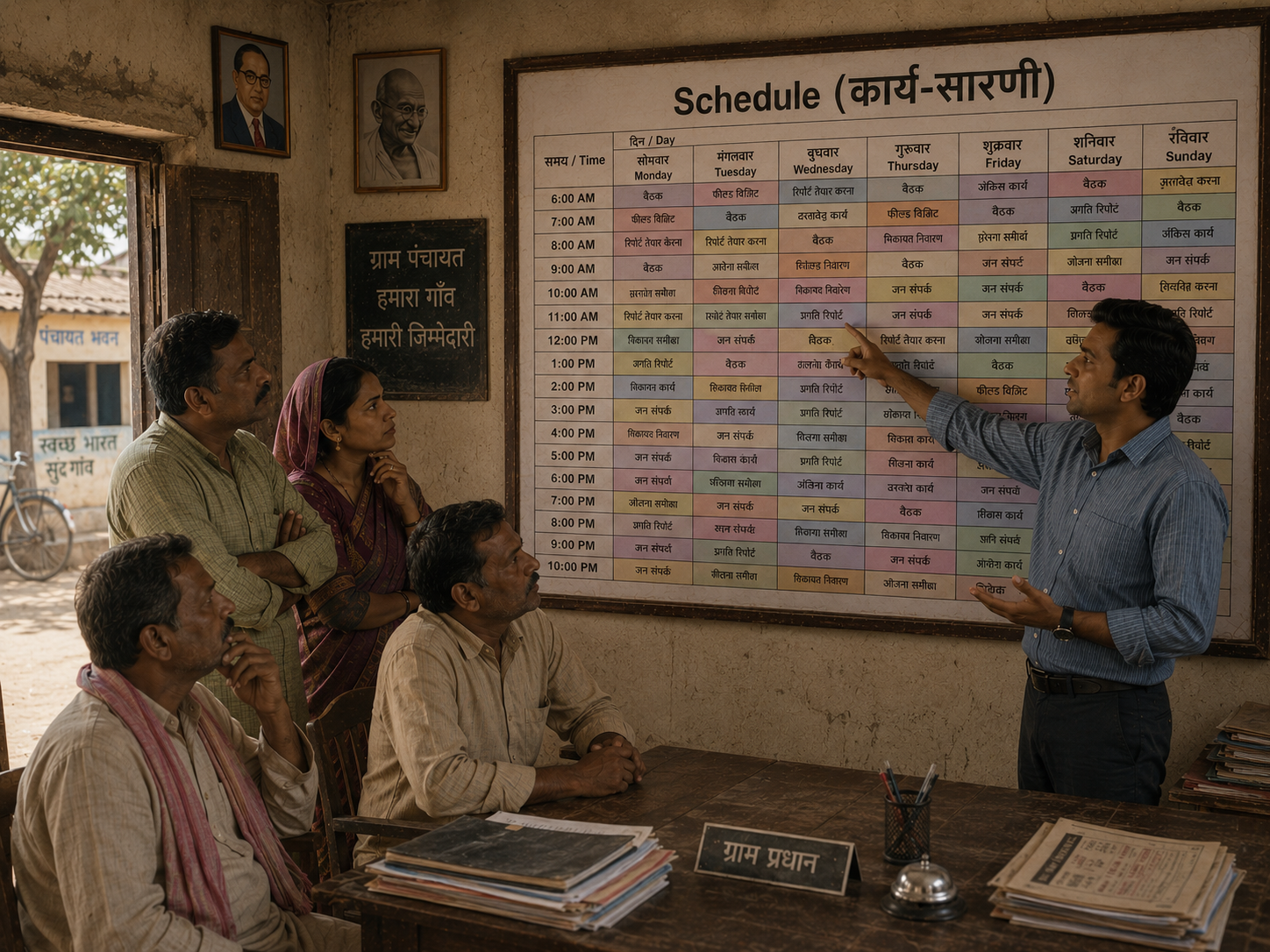
This is accountability turning into a leash with a stopwatch attached. Both clients eventually failed to adopt our tool, not because the software lacked features, but because no tool should handle what they were asking for. We'd have basically been automating a panopticon and charging a monthly subscription for the privilege.
The Real Lesson
Both companies, in their own special way, had confused tracking effort with producing results. And the irony (the genuinely funny part, if you squint) is that both ended up spending more energy monitoring the work than the work itself required.
The more they tried to measure productivity, the less productive everyone became. It's like hiring someone to count every chapati your grandmother makes. By the time the counting is finished, lunch is cold. Or imagine stopping a cricket match after every ball to hold a committee meeting about field placements. Eventually nobody remembers the score because they're too busy taking minutes.
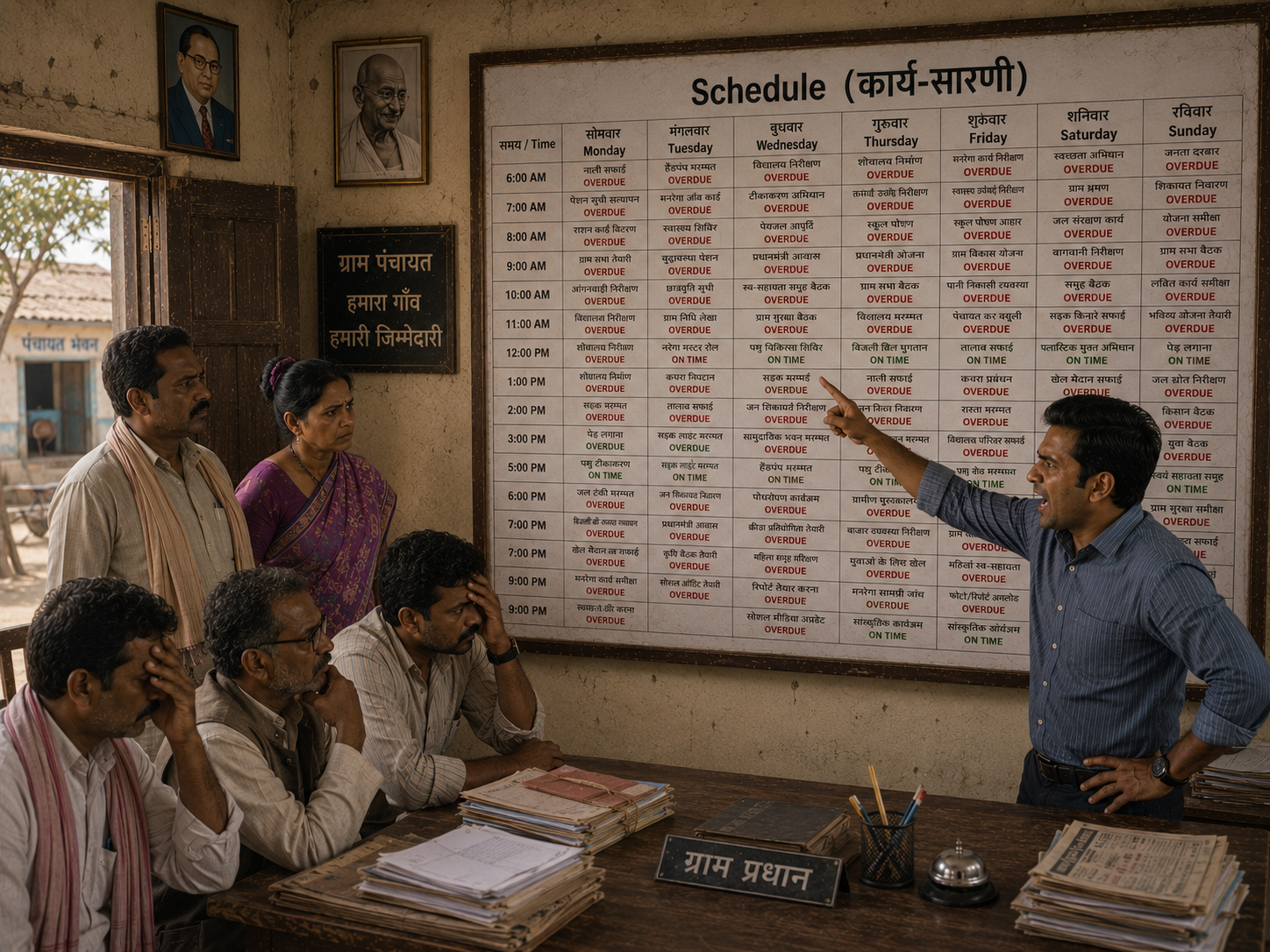
Are we running a business, or running a very expensive performance of running a business?
Accountability, done right, is quiet. It's "here's the goal, here's the deadline, come to me if you're stuck." Accountability, done wrong, is loud, layered, and exhausting. Think of it like salt in food: too little, and everything feels bland; too much, and the meal becomes impossible to swallow.
The Indian workplace, in particular, loves the appearance of control. We mistake constant check-ins for diligence and constant monitoring for management. But real trust is the harder, less glamorous skill, and until companies learn to give people room to actually do the work instead of just prove they're doing it, they'll keep building 3,000-item lists, hiring secretaries to chase ghosts, and wondering why nobody wants to use the nice, simple tool sitting right there, waiting to help.